
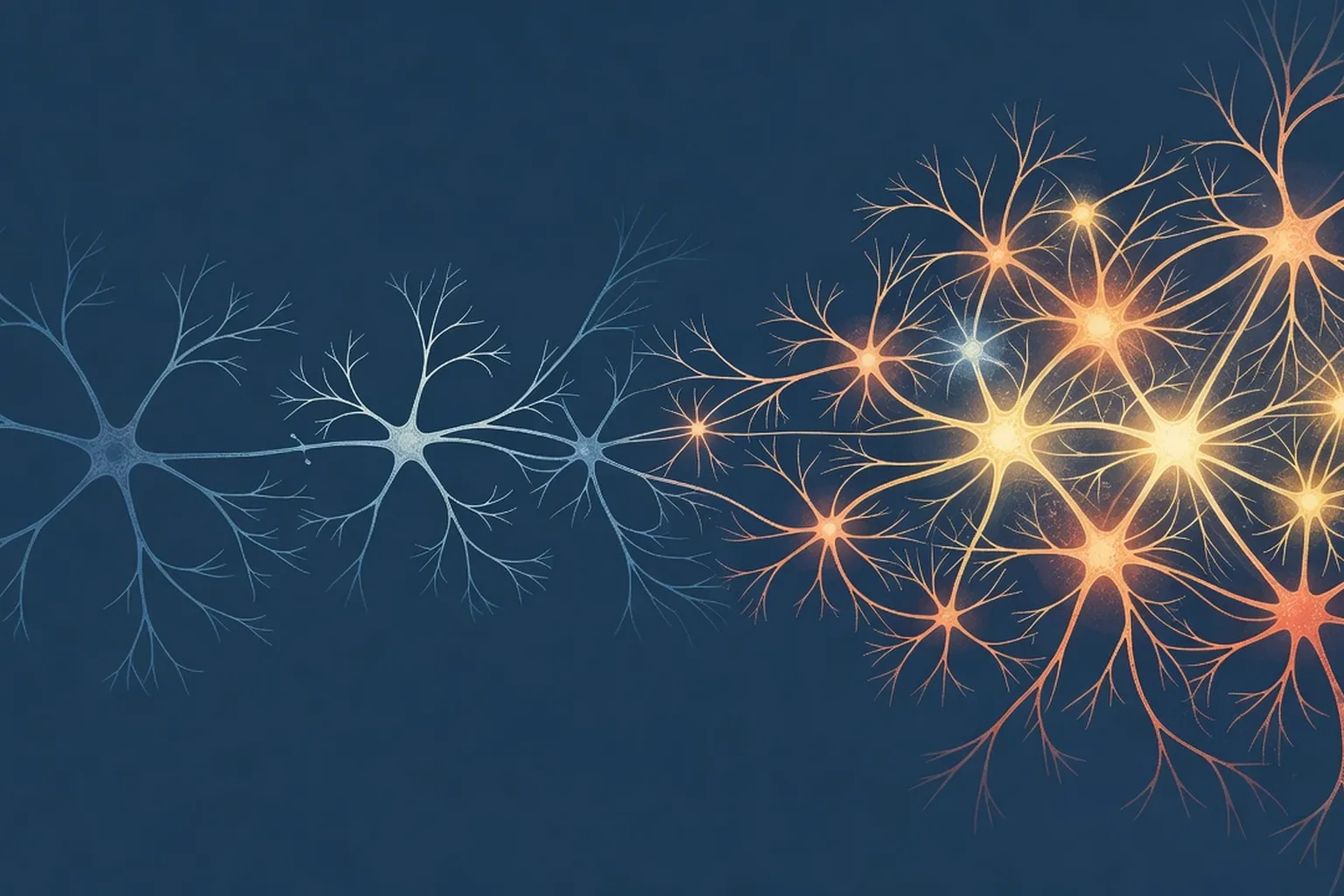
There is something deeply human about the feeling of loneliness — that particular pain of being alone with one’s thoughts, of not feeling seen, understood, connected. For a long time, science treated this feeling as an emotional problem, belonging to individual clinical psychology. John Cacioppo’s work overturned this view.
Loneliness as a Biological Alarm Signal
John Cacioppo (1951–2018), professor of psychology at the University of Chicago, devoted the last 30 years of his career to studying loneliness. His central thesis, developed in his book Loneliness: Human Nature and the Need for Social Connection (2008, with William Patrick), is radical in its simplicity: loneliness is to social connection what hunger is to food.
Hunger is a biological signal that drives us to seek nutrients necessary for our survival. Loneliness is a biological signal that drives us to seek social connections necessary for our survival — and, critically, our flourishing.
Loneliness is a social pain, just as physical pain is an alarm signal for the body. It is a biological warning system that tells us something essential is missing from our lives.
— John Cacioppo & William Patrick, Loneliness, 2008Cacioppo’s biological perspective on loneliness is not a metaphor. His neuroscience research and that of his collaborators showed that social pain activates the same brain regions as physical pain — notably the anterior cingulate cortex. Being socially rejected “hurts” in a literally neurological sense.
Impact on Physical and Mental Health
The biological effects of chronic loneliness are now well documented. Cacioppo showed that lonely individuals present characteristic biological profiles: higher cortisol levels (stress hormone), less effective immune function, higher chronic inflammation (measured by markers like IL-6 and CRP), and disrupted deep sleep even when total sleep duration is normal.
These physical health effects are not merely correlations. Cacioppo developed explanatory models: chronic loneliness activates the sympathetic nervous system (fight-or-flight response) in a sustained way, which has deleterious effects on the entire cardiovascular system. Lonely individuals sleep less deeply and wake more frequently — their brain remains partially on alert, as if watching for threats. Relationship satisfaction and the quality of close bonds constitute the best known antidote to these effects.
Taken together, chronic loneliness’s documented effects on physical and mental health include:
- Elevated cortisol levels — the stress hormone remains chronically elevated rather than returning to baseline
- Weakened immune function — reduced effectiveness of the body’s defenses
- Chronic inflammation — measurable through markers like IL-6 and CRP
- Disrupted deep sleep — poor sleep architecture even when total sleep duration is normal
- Sustained sympathetic nervous system activation — a fight-or-flight response that never fully switches off, with deleterious effects on the cardiovascular system
- 26-32% increased premature mortality risk — per Holt-Lunstad et al.’s (2015) meta-analysis of 3.4 million people, a risk comparable to smoking 15 cigarettes daily

The Crucial Difference Between Loneliness and Social Isolation
One of Cacioppo’s most important contributions is the conceptual clarification between subjective loneliness and objective social isolation. These two phenomena only partially overlap.
Social isolation is quantitatively measurable: number of social contacts per week, size of social network, frequency of interactions. But Cacioppo showed that it’s the perception of the adequacy of one’s social connections — subjective loneliness — that predicts health outcomes, not objective isolation.
A person surrounded by many superficial relationships can feel profoundly lonely, while a person with few contacts but relationships of great depth can feel well connected. This distinction has important practical implications: increasing a lonely person’s number of contacts is insufficient and may even worsen things if these contacts remain superficial.
Key takeaway: Social isolation is an objective count of social contacts; loneliness is the subjective feeling that one’s connection needs aren’t met. A person can be objectively isolated without feeling lonely, and a person can be surrounded by others while feeling profoundly disconnected. Cacioppo’s research shows it is this subjective loneliness — not the objective headcount — that predicts health outcomes.
How Connection Needs Change Across the Lifespan
Social connection needs are not identical throughout life. Laura Carstensen’s (1991) Socioemotional Selectivity Theory proposes that individuals, as they age and become aware of time’s limitations, become more selective in their social investments. They reduce the size of their social network but increase its emotional depth.
Adolescents and young adults tend to value broad, diverse connections — to explore their identity, develop social skills, and position themselves in hierarchies. Mature and older adults value a few deep, meaningful relationships more. This evolution is not a sign of isolation but of natural optimization of emotional investments.
Digital Connections: Solution or Illusion?
The rise of social networks since the 2000s has renewed debates about the nature of digital connections. Can they replace face-to-face social bonds? Do they reduce loneliness or worsen it?
Research is nuanced. Studies show digital connections can reduce loneliness in specific contexts — elderly individuals geographically isolated, people with conditions limiting mobility, communities of people sharing marginalized identities who struggle to find peers in their immediate environment. Long-distance couples are a particularly well-studied case of this tension between geographic isolation and sustained connection: our article on the psychology of long-distance relationships details what the research shows about managing loneliness and connection in that specific context.
But several meta-analyses have found a positive correlation between intensive passive social media use (consuming without interacting) and loneliness in young adults. The probable mechanism: systematic social comparison with idealized representations of others’ lives, reinforcing the feeling that one’s own social life is insufficient.
The quality of digital exchanges appears crucial: deep asynchronous interactions (long emails, detailed messages) are associated with less loneliness than superficial, rapid interactions (likes, short comments). A digital connection that extends and enriches an existing relationship is fundamentally different from one that replaces a real relationship.

How to Rebuild Authentic Social Bonds
Chronic loneliness creates a cruel paradox that Cacioppo calls “social hypervigilance”: lonely individuals are often more attentive to social signals, but they interpret them with a negative bias — seeing rejections where there are none, threats where there is neutrality. This cognitive bias makes reconnection difficult because it sabotages interactions at the very moment the person seeks to reconnect.
The path toward authentic social bonds often requires dual work — external and internal:
- Multiply opportunities for structured, repeated contacts — team sports, volunteering, and associative activities are particularly effective because they create natural, recurring occasions for interaction
- Identify and correct the cognitive biases of loneliness — often with therapeutic help, learning to recognize when neutral social signals are being misread as rejection
- Start with light but regular contacts — neighbors, shopkeepers, colleagues — rather than seeking deep bonds immediately
- Prioritize depth over breadth — a few relationships of genuine depth matter more than a wide network of superficial ties
- Build trust progressively — through repeated interactions and shared vulnerability accumulated over time
This internal work often engages with attachment patterns formed in early childhood — the Bowlbian lens showing how attachment style directly shapes the cognitive bias that loneliness activates: the tendency to read neutral social signals as rejection, which sabotages the very reconnection efforts it triggers. These themes are also gathered in our thematic section Attachment.
Cacioppo emphasizes a fundamental point: the goal isn’t the quantity of connections but their depth. A few relationships where one truly feels seen, understood, and accepted are infinitely more valuable than dozens of superficial relationships. And these deep relationships are built over time, through repeated interactions, shared vulnerability, and progressively accumulated trust.
The Neuroscience of Social Connection: Why We’re Wired for Others
The neurological basis of human social connection has been illuminated by decades of research that confirms what Cacioppo’s behavioral studies suggested: our brains are fundamentally social organs, shaped by evolution to function optimally within webs of social connection.
Mirror neuron systems — neural circuits that activate both when we perform an action and when we observe others performing the same action — are thought to underlie our capacity for empathy and social attunement. These systems, most developed in humans compared to other primates, allow us to literally “feel with” others in a neurological sense, not just in metaphor.
The social baseline theory developed by James Coan argues that the brain’s default assumption is that social resources are available — and it calibrates metabolic expenditure accordingly. When social resources are perceived as unavailable (loneliness), the brain must work harder to regulate itself, consuming more cognitive and physiological resources for basic functions. This is why loneliness is metabolically and cognitively expensive: the brain is running without its assumed support structure.
This neurological perspective helps explain why loneliness affects cognitive functioning in addition to mood. Chronically lonely individuals show measurable decrements in executive function, attention, and memory consolidation — their brains are perpetually running in an inefficient “solo mode” that wasn’t the system’s design. Our article on the science of loneliness by Cacioppo provides a detailed explanation of these mechanisms and the EASE framework for rebuilding connection.
Loneliness, Inflammatory Processes, and the Immune System
Among Cacioppo’s most significant contributions was demonstrating the specific molecular pathways through which loneliness affects physical health. Working with genomics researchers, his team found that loneliness upregulates the expression of genes involved in inflammation and downregulates genes involved in antiviral responses.
The functional consequence: lonely people develop stronger inflammatory responses — which is protective acutely but damaging chronically — and weaker defenses against viruses. This may explain why lonely individuals are more susceptible to viral infections and have been found to develop more severe symptoms when infected.
This molecular finding connects to the evolutionary logic Cacioppo proposed: in ancestral environments, social isolation typically signaled physical danger (exile from the group, nocturnal isolation when predators were active). The appropriate biological response was to increase vigilance, increase inflammatory readiness (to respond quickly to wounds), and conserve resources. This response is adaptive short-term but profoundly damaging when chronically activated by modern forms of persistent loneliness. Those navigating persistent loneliness alongside low mood may also find complementary support on Combattre la Dépression.
Research on relationship satisfaction complements this picture: satisfying intimate relationships appear to dampen these stress-inflammatory responses, providing a biological explanation for the documented health benefits of close bonds. For evidence-based resources on social connection and loneliness interventions, the American Psychological Association at apa.org provides accessible research summaries and clinical guidance.
This guide is also available in French: Solitude et connexion.
Loneliness as a Public Health Crisis
In the past decade, loneliness has been increasingly recognized as a public health issue requiring structural responses, not just individual therapeutic interventions. The United Kingdom appointed a Minister of Loneliness in 2018 following the Jo Cox Commission on Loneliness, which estimated that over 9 million people in the UK often or always feel lonely. Japan followed in 2021.
The COVID-19 pandemic accelerated these concerns dramatically. Lockdown measures that were epidemiologically necessary forced widespread social isolation, and subsequent research has documented significant increases in reported loneliness, particularly among young adults, elderly individuals, and people living alone. Paradoxically, pandemic-era research also found that some people — particularly those in dysfunctional relationships — reported reduced loneliness after gaining distance from toxic connections, underscoring that quality matters far more than quantity.
Public health responses to loneliness have moved beyond individual therapy toward community design: creating physical spaces that encourage spontaneous social interaction, funding community organizations that bring people together around shared activities, reducing structural barriers to social participation (transportation, cost, scheduling). Research on the “third places” concept (Ray Oldenburg) — informal gathering spots like cafes, libraries, and parks that function neither as home nor work — emphasizes that environments that facilitate repeated low-stakes social contact allow relationships to develop organically. Understanding these larger structural forces helps locate individual experiences of loneliness within a social context that makes them more comprehensible — and more addressable — than if they were purely individual failings.
Loneliness and the Quality Versus Quantity Distinction
One of the most practically consequential findings from Cacioppo’s research concerns the distinction between social quantity and social quality. His data consistently showed that what mattered for health and wellbeing was not how many people a person knew or how often they interacted, but whether they felt genuinely known and understood by at least one person.
This distinction has significant implications for intervention. Programs that simply increase social contact — organizing group activities, introducing people to each other — show mixed results in reducing chronic loneliness. Without attention to the quality of those contacts, quantity can even worsen loneliness by providing superficial interaction that highlights the absence of deeper connection.
Effective interventions for chronic loneliness, Cacioppo found, needed to address both the external (providing opportunities for connection) and the internal (addressing the cognitive hypervigilance and negative interpretive biases that sabotage connection attempts). Cognitive approaches that help lonely individuals recognize and challenge their tendency to interpret neutral or ambiguous social signals as rejection showed more sustained effects than social-exposure alone.
For individuals seeking to address their own loneliness, this research suggests a counterintuitive but powerful principle: invest in deepening existing relationships before broadening the network. The incremental intimacy of sharing something real with someone already present in one’s life — a colleague, a neighbor, a family member — is often more loneliness-reducing than the addition of new, necessarily shallow social contacts. And the willingness to be seen more fully, with all the vulnerability that entails, is ultimately what allows connection to move from surface contact to the felt sense of belonging that Cacioppo identified as the true antidote to loneliness. The quality of couple communication within intimate partnerships is often the single most powerful modulator of subjective loneliness — Gottman’s research confirms that couples who regularly “turn toward” each other’s bids for connection experience far less of the subjective isolation that drives loneliness’s health consequences.
Loneliness and Sleep: A Bidirectional Relationship
A particularly striking finding from Cacioppo’s research program concerns the relationship between loneliness and sleep quality. Lonely individuals don’t simply sleep less — they sleep differently. Their sleep shows more microarousals (brief awakenings that are not consciously remembered but disrupt sleep architecture) and less slow-wave deep sleep, even when total sleep duration appears normal.
The evolutionary interpretation is compelling: in ancestral environments, sleeping alone without social protection was genuinely dangerous. The brain of a socially isolated individual adapted by maintaining a higher vigilance threshold even during sleep — scanning for threats that a vigilant social group would otherwise detect. This hypervigilant sleep is deeply restorative but chronically exhausting in modern contexts where the danger is social rather than predatory.
This finding has direct practical implications. Addressing loneliness may be among the most powerful sleep interventions available for individuals whose poor sleep is driven by social disconnection rather than sleep hygiene factors. And conversely, the cognitive and emotional effects of chronic sleep deprivation — irritability, negative bias, impaired social judgment — can reinforce the very hypervigilance and interpersonal difficulties that maintain loneliness, creating a cycle that neither sleep intervention nor social intervention alone can fully break.