

John T. Cacioppo did not set out to study loneliness. He was a social neuroscientist at the University of Chicago — one of the world’s leading researchers on the relationship between the brain, the body, and social experience. What drew him to loneliness was a question that most scientists in his field had been ignoring: why does the absence of social connection make people physically sick?
His answer, developed over two decades of research and summarized in his landmark 2008 book Loneliness: Human Nature and the Need for Social Connection (co-written with science journalist William Patrick), transformed the way psychologists, physicians, and public health officials think about isolation. Loneliness, Cacioppo argued, is not a character flaw, a sign of weakness, or an unfortunate personality trait. It is a biological signal — as fundamental and as purposeful as hunger or pain — that alerts us when something essential is missing. The foundational mechanisms underlying this signal are explored in our guide on loneliness and connection.
That reframing has profound consequences for how we understand relationships, health, and the modern epidemic of social disconnection.
What Loneliness Really Is — Not Just Being Alone
The most important conceptual move in Cacioppo’s work is the distinction between being alone and being lonely. These two states are completely independent.
Loneliness, as Cacioppo defines it, is a subjective perception — the painful experience of feeling that one’s social connections are insufficient in number, quality, or both. It is not about how many people surround you. It is about whether you feel genuinely seen, understood, and connected. Many people feel profoundly lonely in marriages, in offices full of colleagues, at parties. Many others live largely solitary lives and rarely experience loneliness at all.
Solitude — chosen aloneness — is a different matter entirely. For many people, particularly introverts, periods of solitude are restorative and necessary. The solitary writer who spends eight hours a day alone with their work and then meets a close friend for dinner is not lonely. The person who attends three social events a week but feels fundamentally unseen at all of them very well might be.
This distinction matters because it redirects the solution. Loneliness cannot be solved by simply adding more people. It requires a different kind of attention: to the quality and authenticity of connection, not its quantity.
Key takeaway: Loneliness is a subjective perception of insufficient connection, not a headcount. Solitude is chosen aloneness and is often restorative. You can be surrounded by people and lonely, or alone and not lonely at all — the difference is whether you feel genuinely seen and understood.
Cacioppo’s research also shows that loneliness is not a fixed trait. It fluctuates. The same person can feel deeply connected in one period of life and profoundly isolated in another — after a move, a breakup, a loss, a retirement. This makes loneliness something that can be addressed and reduced, not a permanent condition to be endured. Breakups in particular carry a distinct kind of loneliness, bound up with grief and identity disruption — our interview with a psychologist on heartbreak and breakup recovery unpacks what the research says about navigating that specific transition.
The Biological Effects of Loneliness
What made Cacioppo’s research genuinely revolutionary was not the insight that loneliness feels bad — everyone already knew that — but the discovery of its measurable biological footprint.
Lonely individuals, his research found, show elevated activity in the hypothalamic-pituitary-adrenal (HPA) axis — the body’s primary stress-response system. This translates into chronically elevated cortisol levels, the hormone associated with the fight-or-flight response. When cortisol stays high for extended periods, it has downstream effects on virtually every system in the body.
The immune effects are particularly striking. Cacioppo and his colleagues found that lonely individuals show suppressed natural killer cell activity — the immune cells that identify and destroy virally infected and cancerous cells. They also show elevated inflammatory markers, including interleukin-6 (IL-6) and C-reactive protein. In a series of studies, they found that loneliness predicts how well people respond to flu vaccines — lonely people mount a weaker immune response.
Perhaps most surprisingly, Cacioppo found that loneliness produces measurable changes in gene expression. Specifically, it upregulates the activity of genes associated with inflammation and downregulates genes associated with antiviral responses — a biological signature of social deprivation that he described as the body preparing for attack while losing its capacity to fight infection.
The cardiovascular effects are equally documented. Lonely individuals show higher blood pressure, less effective sleep (more fragmented, less restorative), and accelerated cognitive decline in older age. A landmark meta-analysis by Julianne Holt-Lunstad and colleagues (2015) — drawing on data from 148 studies and over 300,000 participants — found that social isolation and loneliness are associated with a 26% increase in mortality risk. The comparison that Cacioppo himself frequently cited: the health impact of chronic loneliness is equivalent to smoking 15 cigarettes per day. For health resources on managing psychological wellbeing in France, Ma Santé Mes Soins is a useful reference.
This is not a minor inconvenience. This is a public health crisis.
How Loneliness Spreads — The Social Network Research
Loneliness is not a peripheral feature of human experience. It is a core biological need — as fundamental as the need for food and shelter — with consequences that extend across communities and across generations.
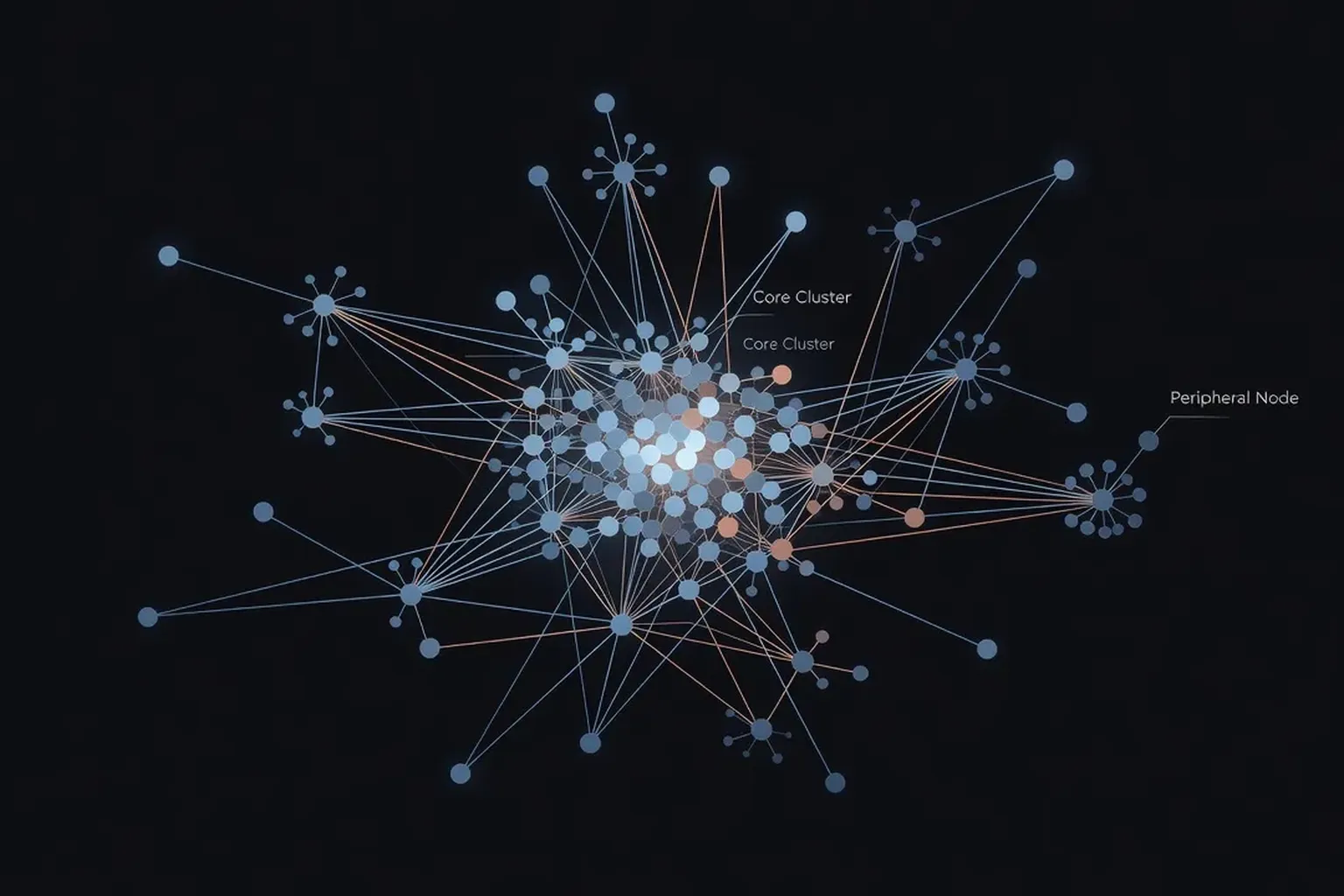
— John T. Cacioppo & William Patrick, Loneliness, 2008One of the most counterintuitive findings in Cacioppo’s body of work came from a collaboration with political scientist James Fowler and sociologist Nicholas Christakis, published in 2009 in the Journal of Personality and Social Psychology. Studying data from the Framingham Heart Study — a multigenerational longitudinal health study in Massachusetts — they found that loneliness spreads through social networks in patterns that resemble the spread of infectious disease.
People on the periphery of social networks — those with fewer connections, who tend to know each other less well — are more likely to feel lonely. And this loneliness can then transmit to the people connected to them, nudging them toward the network’s edge as well. The effect was measurable up to three degrees of separation: your friend’s friend’s friend’s loneliness increases the probability of your own. These themes of social connection and disconnection are also gathered in our thematic section Attachment.
The mechanism is not viral in the biological sense — it is behavioral and perceptual. Lonely people, Cacioppo found, become hypervigilant to social threat. They start reading neutral social signals as potentially hostile. They may withdraw slightly, become less generous in their interpretations of others’ behavior, and inadvertently push people away — which increases their isolation, which increases their loneliness, in a self-reinforcing cycle.
This finding has significant implications for how communities and organizations think about social health. Addressing loneliness at the individual level matters, but the network dynamics suggest that interventions at the structural level — creating conditions for genuine connection rather than just proximity — may be equally important.

Loneliness vs. Solitude — A Critical Distinction
It is worth dwelling on the solitude distinction, because the cultural conversation about introversion has complicated it in useful and less useful ways.
Introversion — the tendency to find solitude energizing and extended social contact draining — is a genuine personality dimension with a biological basis. Introverts often need significant alone time and thrive with it. But introversion does not protect against loneliness. An introvert who has three or four deep, genuine friendships and regular meaningful contact with people who truly know them may have a rich social life — just a quieter one than their extroverted counterpart.
What Cacioppo’s research makes clear is that the need for belonging is universal — it varies in expression and intensity, but no human being is biologically designed to live without any meaningful connection. This connects directly to the research on relationship satisfaction, where quality of connection consistently outweighs quantity as a predictor of wellbeing. Voluntary solitude, chosen within a larger context of connection, is healthy and often necessary. Involuntary isolation, or surface-level contact that provides the appearance of connection without its substance, activates the same biological stress responses regardless of personality type.
The practical implication: if you identify as an introvert and feel comfortable with large amounts of time alone, this is likely healthy. But it is worth asking, honestly, whether the connections you do maintain are genuinely nourishing — whether they involve being truly known by another person — or whether they function as social maintenance without real intimacy.
What This Means for Your Relationships
Cacioppo’s research reframes what we should be looking for in relationships — romantic, platonic, and otherwise. The key variable is not the number of relationships but what he calls perceived social connection — the sense that someone genuinely knows you, accepts you, and would be there if needed.
This has a somewhat uncomfortable implication: large social networks filled with acquaintances provide much weaker protection against loneliness than a small number of genuinely close relationships. The person with 500 social media connections and no one to call at 2am when something goes wrong is, in the relevant biological sense, more isolated than the person with three close friends they can count on absolutely.
Cacioppo also found that the quality of existing relationships matters enormously. Conflictual relationships — marked by hostility, criticism, or pervasive negativity — can actually increase loneliness rather than reduce it. Being in a relationship does not automatically provide the protective social connection that Cacioppo’s research describes. Even couples actively working through betrayal and trust repair — a process explored in depth in our interview on rebuilding trust after betrayal — may experience profound loneliness within the relationship before genuine reconnection is achieved. What provides protection is the experience of connection: feeling understood, valued, and secure within the relationship.
This aligns with research on relationship satisfaction and loneliness, which consistently find that relationship quality predicts wellbeing outcomes more strongly than relationship status.
4 Evidence-Based Ways to Combat Loneliness — many of which overlap with broader strategies for relationship satisfaction
Cacioppo was not only a diagnostician of loneliness — he was interested in what helps. He and his colleagues developed the EASE framework, a sequence of steps designed for people actively experiencing loneliness.
- Extend yourself. The first step is to initiate low-stakes social contact — not to find a best friend immediately, but to warm the social environment. A conversation with a neighbor, a genuine question asked of a colleague, volunteering for an hour a week. The goal is to interrupt the hypervigilance cycle: to give the nervous system evidence that social contact is safe, rather than threatening. Start with low-commitment, low-stakes interactions.
- Act as if. Loneliness creates a perceptual bias toward negative social interpretations. Cacioppo found that lonely people are faster to perceive rejection and slower to perceive acceptance — even when the objective evidence is ambiguous. The “act as if” step involves deliberately choosing to interpret social signals more charitably, and behaving as a socially confident person would — not as a performance, but as a behavioral experiment. The nervous system updates based on what the body does, not just what the mind thinks.
- Seek collectives. Rather than trying to “make friends” — a direct search that can feel forced and awkward — Cacioppo recommends joining groups organized around a shared interest or activity. A running club, a book group, a community garden, a volunteer organization. The shared purpose lowers the social pressure and provides repeated, low-stakes contact with the same people over time. Friendships often grow from this sustained exposure. Seeking friendship directly, without the scaffolding of a shared activity, is harder.
- Engage fully. The final and deepest step is investing in a small number of existing relationships — deepening them through genuine disclosure, vulnerability, and time. This is where the most protective social connection lives. Not in breadth but in depth. One relationship in which you are truly known is worth more to your health and wellbeing than a dozen pleasant acquaintances.
Cacioppo’s Legacy — Loneliness as a Call to Action
John Cacioppo died in 2018 at the age of 66. In the years since, his framework has influenced public health policy across multiple countries — the United Kingdom appointed a Minister for Loneliness in the same year he died — and his core insight has become increasingly mainstream: that social connection is not a luxury but a biological necessity, and that its absence produces measurable harm.
What Cacioppo’s work ultimately offers is a reframe: loneliness is not something to be ashamed of. It is not evidence of inadequacy, unlovability, or failure. It is a signal — like hunger or pain — that something the body needs is missing. And like hunger and pain, it can be attended to. The signal can be heard and answered.
That reframe matters because one of the cruelest features of loneliness is that it turns inward. People who feel lonely often conclude that the problem is with them — that they are too awkward, too boring, too damaged to be loved. Cacioppo’s research shows that this conclusion is both factually wrong and neurobiologically predictable: the hypervigilance and negative bias that loneliness produces are mechanisms designed to protect, not accurate assessments of self-worth.
Understanding that allows a different response — one oriented outward, toward the small, gradual, low-stakes acts of reaching toward others that Cacioppo’s research suggests are the actual path through.
For further reading on how connection and solitude interact in everyday life, see our guide on solitude and connection (available in French).