

There is a culturally dominant narrative about romantic love: at first, it is a whirlwind—intrusive thoughts, obsessive desire, a sense of absolute certainty. Then, inevitably, the storm subsides. What remains is either a fulfilling, stable relationship or a disappointment tinged with nostalgia. Relationship science offers another framework—more precise, and ultimately more useful.
Elaine Hatfield, a professor at the University of Hawaii. To explore the different love styles described by John Alan Lee in greater depth, our guide to love styles offers a comprehensive, pioneering overview of the psychology of romantic love, proposed in 1988 a distinction that has become essential in the literature: passionate love (passionate love) and companionate love (companionate love). These two states are not different degrees of the same thing—they engage distinct neurobiological systems and serve different evolutionary functions.
Passionate love—the neurochemistry of infatuation
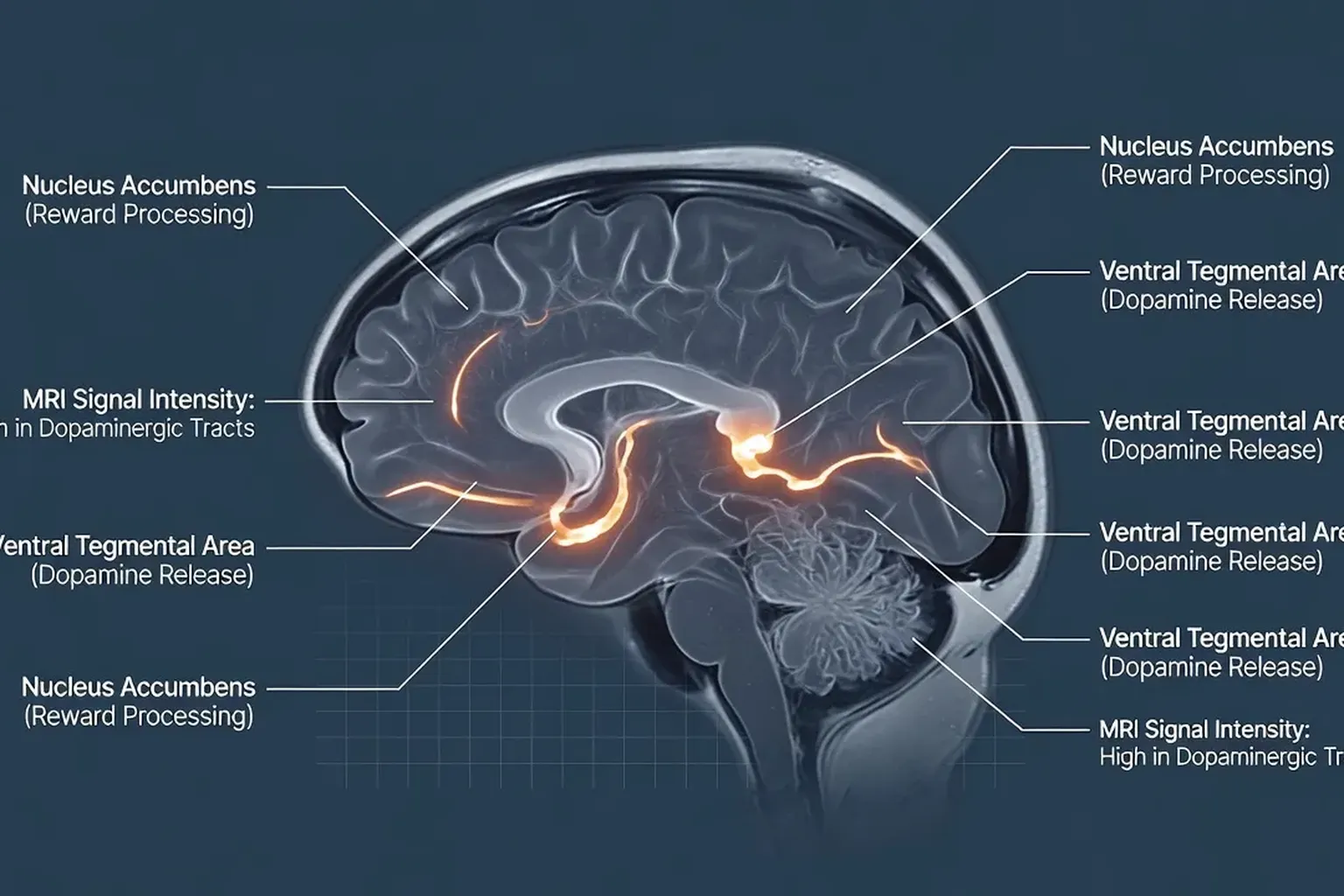
Beginning in the 2000s, Helen Fisher, an anthropologist at Rutgers University, conducted fMRI (functional magnetic resonance imaging) studies on people who had recently fallen in love. What these images reveal is striking: neurologically, being in love resembles an impulse more than an emotion—comparable to hunger or thirst—and it massively activates the dopaminergic system.
More specifically, Fisher and her colleagues (2005) identify three brain systems involved in love:
Sex drive, regulated primarily by testosterone and estrogen. It drives people to seek sexual partners indiscriminately.
Romantic attraction, dominated by dopamine and norepinephrine. It creates fixation on a specific person, exhilarated energy, a reduced need for sleep and food, and intrusive thoughts. The dopaminergic system is the same one activated by cocaine—which explains both the intensity of the experience and the pain of withdrawal during a breakup. Our interview with a psychologist about romantic breakups explains precisely what this neurochemical withdrawal entails in concrete terms, and how to get through it.
Attachment, mediated by oxytocin and vasopressin. It produces the feeling of serenity, security, and belonging that characterizes lasting relationships.
These three systems can be activated independently—one can feel attraction without attachment, or attachment without sexual attraction—but in the best relationships, they converge.
The phase of intense infatuation—dominated by dopamine and norepinephrine—is physiologically unsustainable in the long term. Fisher’s studies (2004) suggest that it generally subsides between 18 and 36 months in most couples. This is not a failure: it is a shift in neurobiological mode.
| Dimension | Passionate love | Companionate love |
|---|---|---|
| Neurochemical basis | Dopamine, norepinephrine (a system also activated by cocaine) | Oxytocin, vasopressin |
| Typical duration | Subsides between 18 and 36 months (Fisher, 2004) | Develops and is sustained over the long term |
| Dominant characteristic | Intense fixation, intrusive thoughts, sexual desire, exhilarated energy | Serenity, security, sense of belonging |
| Evolutionary function | Create selection of and attraction toward a specific partner | Maintain the bond and long-term cooperation |
| Hatfield’s comparison | “An intense state of absorption in another” (1988) | “Deep affection for someone whose life is closely intertwined with our own” (1988) |
Companionate love—oxytocin, vasopressin, and the stable bond
Where the infatuation phase is volatile and energy-intensive, companionate love settles in as an underlying system—less spectacular, but with an entirely different depth.
Oxytocin, a neuropeptide released during physical contact, breastfeeding, and orgasm, plays a central role. Sometimes called the “attachment hormone” or “cuddle hormone,” it promotes trust, reduces social anxiety, and encourages an orientation toward others. Recent studies (Feldman, 2017) show that the oxytocin levels of parents and their children synchronize during positive interactions—the same mechanism appears to operate in long-term couples.
In men, vasopressin plays a complementary role. Young and Wang’s studies (2004) on prairie voles—one of the few monogamous mammals—showed that vasopressin regulates mate-guarding and selective attachment behaviors. In humans, correlations have been found between certain variants of the vasopressin receptor gene and the quality of couple relationships.
But reducing companionate love to its neurochemistry would be reductive. What Hatfield captures in her definition—“a deep and calm affection for someone whose life is closely intertwined with our own”—includes dimensions that biology alone cannot measure: shared history, profound mutual knowledge, and trust built over years of experiences faced together.
The desire curve—why passion subsides
Romantic passion does not die out—it transforms. The question is not how to preserve it as it is, but how to understand what takes its place.
— Elaine Hatfield & Richard Rapson, Love and Sex, 1993All our resources on the psychology of love are gathered in our thematic section Love. In his longitudinal studies of couples, John Gottman identifies a mechanism that psychologists call habituation: the gradual reduction in response to a repeated stimulus. In the context of relationships, the novelty that fueled dopaminergic excitement—mutual discoveries, first experiences, uncertainty—diminishes as partners get to know each other better.
Gottman nevertheless distinguishes couples who maintain high satisfaction over the long term from those who stagnate or separate. The key variable is not passion—it is what he calls the “little things”: responses to a partner’s attempts at connection (bids for connection). A glance, a question, a supportive gesture—when these micro-interactions are received positively, they maintain a level of emotional connection that more than compensates for the fading of initial infatuation.
Habituation is not inevitable—as shown by the longitudinal research we describe in our guide to marital satisfaction—it is a phenomenon that research shows to be partially malleable.
Is it possible to maintain passion over the long term?

The answer from research is nuanced: yes, but not by trying to “recreate” the beginning. Arthur Aron, a psychologist at Stony Brook University, proposes what he calls self-expansion theory (self-expansion theory). His premise: human beings have a fundamental need to expand the self—their abilities, perspectives, and resources. At the beginning of a relationship, the partner is precisely a vehicle for this expansion (new experiences, a new worldview, new parts of the self discovered through the other person’s eyes).
When this expansion stops—when everything is known, predictable, routine—desire subsides. The antidote proposed by Aron and his colleagues (2005): maintain expansion by sharing new and stimulating experiences—not necessarily romantic ones. A classic study showed that couples who engaged in physically exciting activities together (crossing an unstable suspension bridge) reported stronger mutual attraction than those who engaged in neutral activities. The brain attributes physiological arousal to the partner’s presence.
This research has practical implications: boredom in a couple is not fatal. It is a sign that the partners have stopped offering each other opportunities for expansion. This is also what we describe in our analysis of the 10 signs of secure attachment—the ability to commit fully without losing oneself is precisely what makes this expansion possible.
Sternberg’s triangle—passion, intimacy, commitment
In 1986, Robert Sternberg, a psychologist at Cornell University, proposed an integrative model that remains one of the most widely used in love research: the triangular theory of love. Love is represented as a triangle whose three vertices are:
- Passion: physical and romantic attraction, desire. It is the most volatile of the three components—the strongest at the beginning, and the most likely to fluctuate.
- Intimacy: the feeling of connection, emotional closeness, and the desire to share and confide in each other. It grows gradually and tends to be more stable than passion.
- Commitment: the decision to remain with the other person and build something together. It is the most deliberative and stable component.
Sternberg names the different possible combinations: romantic love (passion + intimacy without commitment), companionate love (intimacy + commitment without passion), empty love (commitment alone), and consummate love (consummate love)—all three together—as ideal love.
What matters from the perspective of longevity: couples in which only commitment is present (empty love) are the most fragile over the long term, despite their apparent stability. Intimacy—genuine emotional connection—appears to be the strongest pillar of durability.
What long-term couples do differently
Gottman’s longitudinal research spanning more than 40 years makes it possible to identify several differences between couples who maintain high satisfaction over the long term and those who disengage or separate.
- They maintain their love maps. Gottman calls “love maps” the intimate knowledge of each other’s inner world—their dreams, fears, values, and significant stories. Long-term couples maintain and update this knowledge. Our interview on Gottman’s 4 Horsemen of the Apocalypse describes precisely the behaviors that erode this capital. They do not assume that what they knew about their partner ten years ago is still true today.
- They respond to bids. “Bids for connection”—often trivial attempts to connect (a comment about the weather, a shared glance while watching television)—are the basic units of a couple’s emotional life. Long-term couples respond positively to these attempts in 86% of cases. Couples heading toward separation do so in 33%.
- They cultivate shared meaning. Beyond daily rituals, long-term couples create a shared system of meaning—dreams, plans, values—that gives the relationship a dimension beyond everyday life.
- They repair. Inevitably, missteps occur. The ability to repair—to acknowledge, apologize, and return to connection—is more predictive of longevity than the absence of conflict. The behaviors that sabotage this repair—criticism, contempt, defensiveness, and stonewalling—are also central to Gottman’s research on long-term couples.
The trajectory of romantic love is not a decline. It is a transformation. Moving from dopaminergic infatuation to deep attachment, from exhilarating novelty to reassuring familiarity—when this transition is navigated with awareness and commitment—produces something the initial phase could not offer: the confidence that the other person will be there tomorrow and the day after, through the ordinary and extraordinary variations of a shared life. This is precisely what a secure attachment style cultivates. Discover our article in English on rebuilding trust after betrayal, an illustration of the trust issues at the heart of lasting relationships.
For couples seeking support as they navigate these transformations, Écoutez Voir offers resources on relationship well-being.